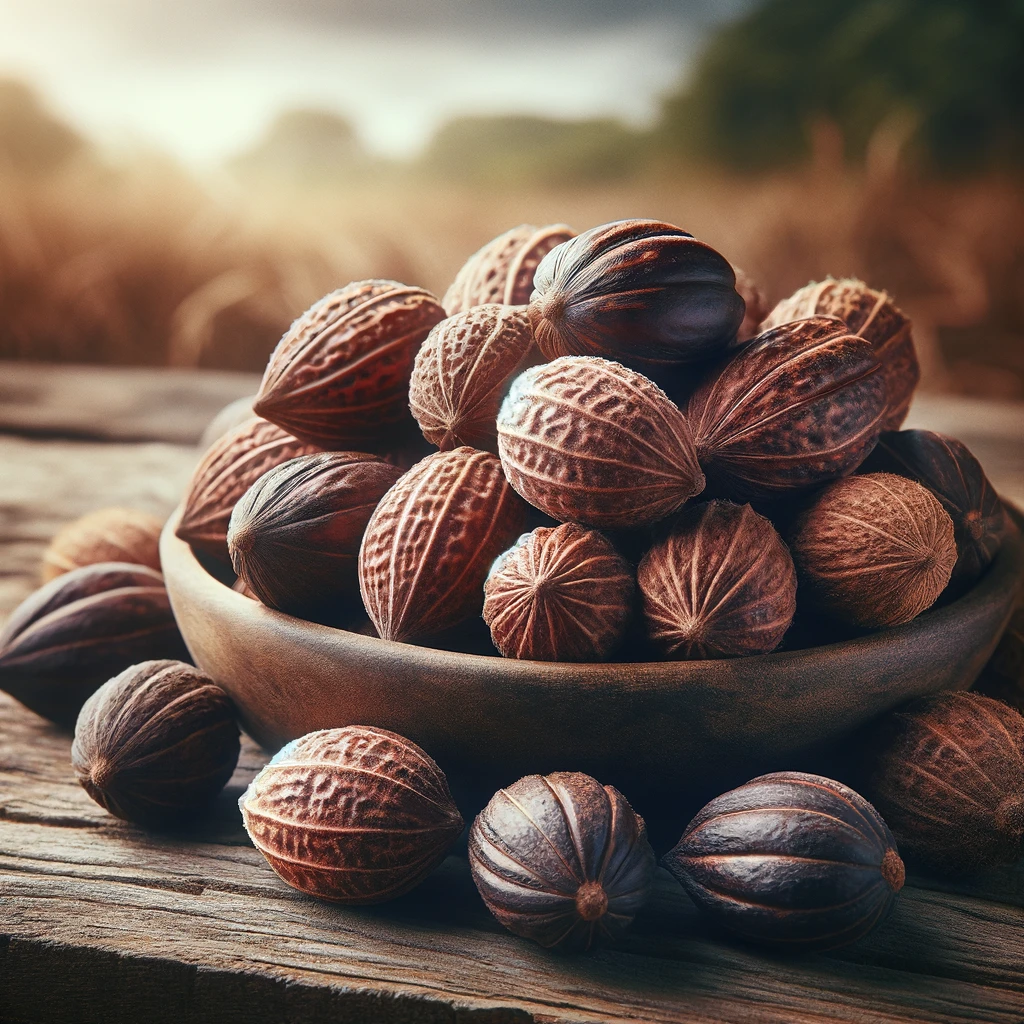
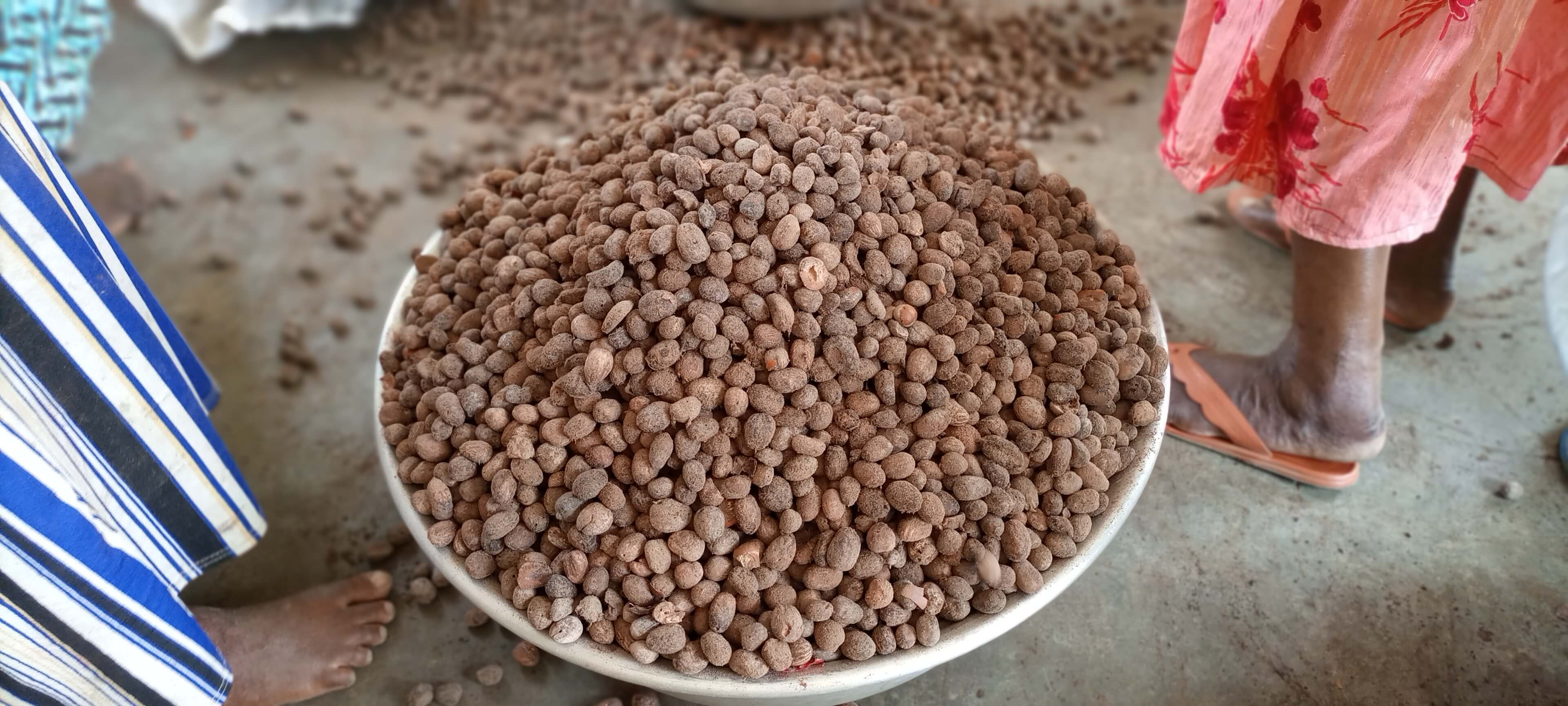
Shea starts with a tree in the African savanna. Inside its fruit is a seed containing the fats that become shea butter. The butter is familiar; the skill and work behind it deserve just as much attention.
The plant
Vitellaria paradoxa
The part we use
Butter from the kernels of the shea tree’s fruit
The roots
Our shea butter comes from Ghana
Why it belongs in the blend
A little more to love.
Shea brings a creamy, softening richness to the ganache. Its oleic and stearic fats help create that cushioning feel and a layer that helps reduce moisture escaping from the skin.
For your skin
Shea’s mixture of plant fats gives dry-feeling skin a rich, softening layer. I love it for hands, heels, knees and elbows, and for the way it leaves a little moisture from your shower feeling comfortably held close. A tiny scoop, warmed in your palms, is a good place to start.
Hair, curls & beard
A trace of shea-rich butter can soften the ends of curls and textured hair. For finer hair, a pre-shampoo application may be easier to enjoy than a leave-in coating. Warm it in your hands first so it spreads evenly rather than sitting in one little patch.
I choose Baraka’s shea butter because the butter and the women behind it both matter. In northern Ghana, traditional shea-making knowledge passes through generations of skilled hands. Baraka’s work creates income for women who harvest and prepare these ingredients, helping them care for their families.
Beautiful butter is only part of the story. Knowing whose hands helped make it is part of why I love putting it in this tin.
Sources checked October 4, 2026. These plant stories offer context for the ingredients. Studies of individual ingredients do not establish clinical results for the finished ganache.